AWS Continuum: Agentic Security at Machine Speed, and What It Actually Means

The Backlog Problem AWS Is Trying to Solve
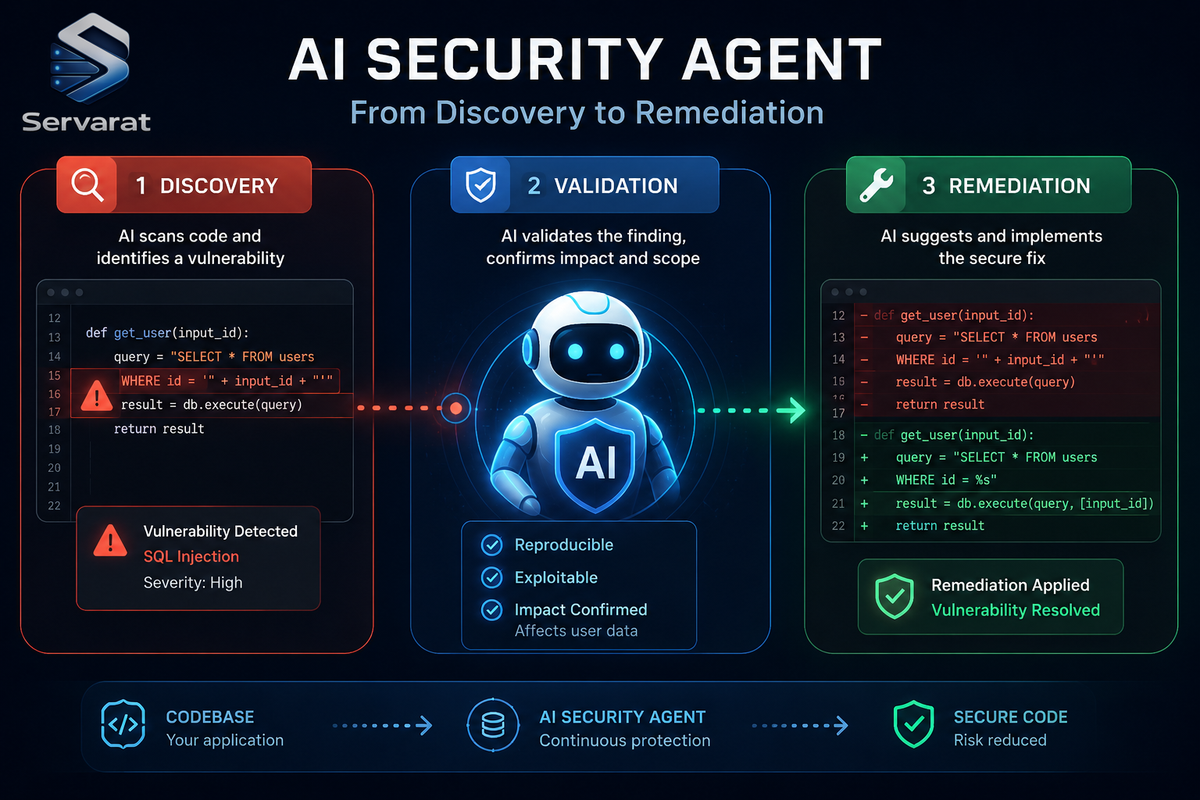
On June 17, 2026, at its New York Summit, AWS launched Continuum—a security platform that uses frontier AI models to discover, validate, and remediate software vulnerabilities across a customer's environment with limited human intervention. Continuum for code vulnerabilities, the first capability, is in gated preview.
The framing AWS gives is worth examining because it's the actual problem, not just marketing. The security operating model of the past decade—collect telemetry, store it, query it, build dashboards to watch it—is straining. Frontier models like Claude Mythos can now find software vulnerabilities and reason through complex attack paths at machine speed. That cuts both ways: defenders find more, but so do attackers, and the result is an exponentially growing backlog of vulnerabilities that human teams can't triage fast enough.
The interesting bet here isn't detection. It's resolution. Plenty of tools already generate thousands of findings. Continuum's pitch is that it carries a finding all the way from discovery to a validated patch, so the bottleneck shifts from "find more bugs" to "actually fix the ones that matter."
⚠️ Worth noting upfront: this is a vendor announcement for a gated-preview product. The architecture is interesting and the problem is real, but nobody outside the preview has run it against a production environment yet. Treat the capability claims as claims until independent results exist.
The Four-Phase Workflow
Continuum reasons over both structured data already in AWS (infrastructure, permissions, network topology, code) and unstructured data (your documents, communications, business priorities). It runs in four continuous phases.
1. Discovery
Security teams already have a backlog, and many are already using frontier models to find more. Continuum ingests that existing backlog and performs its own scan, building a combined view of vulnerabilities and the attack paths they enable. Rather than starting from zero, it absorbs what you already know and extends it.
2. Prioritization
This is where context does the work. Continuum evaluates each finding against questions that determine real risk: Is the affected component actually deployed? Is it reachable? Is it in a production path? What's the business impact if exploited? The output is an evidence-backed priority list instead of a flat severity dump.
This is the same reachability-over-raw-CVSS logic mature vulnerability programs already apply manually—the difference is doing it continuously across the whole backlog.
3. Validation
Continuum tries to surface false positives before they waste your team's time. It contextualizes each vulnerability against your environment, then constructs working exploit examples in a sandboxed environment—concrete, reproducible evidence that the issue is real and exploitable, not theoretical.
⚠️ This sandboxed-exploit-generation step is the most technically significant part, and also the one to scrutinize hardest. An agent that can autonomously build working exploits is powerful for validation and exactly the dual-use capability that drew government attention to frontier models in the first place. The blast radius of a bug in that component is not like a bug in a dashboard.
4. Mitigation and Remediation
Continuum assesses existing defenses around a validated issue—blocking controls, compensating controls, detection mechanisms—then recommends a fix: a network change, a policy change, or a code patch. The patch recommendation is validated using the same system that confirmed the vulnerability, and it provides blast-radius visibility and rollback paths where feasible.
In categories where the customer has granted autonomy, Continuum can apply the fix itself and feed the change into an existing deployment pipeline.
Graduated Trust: The Part That Matters Most
Continuum starts in "learn mode" with a human in the loop. Every recommendation includes the reasoning behind it. As you build confidence, you can graduate it to "enforce mode," enabling remediation that's increasingly automated based on categories and risk profiles you define.
AWS's own analogy: planes can land themselves now, but that automation was introduced gradually and quietly before anyone announced it. Trust doesn't happen on day zero. There's a feedback loop that both teaches the agent and builds human confidence in it.
This is the right architectural instinct, and it's the part to actually hold AWS to. "Graduated trust" is only meaningful if the boundaries between learn and enforce are enforced technically, the audit trail is complete, and rollback genuinely works. ⚠️ The failure mode to watch for: teams under backlog pressure graduating categories to enforce mode faster than the evidence justifies, because the tool makes it easy and the backlog makes it tempting. The autonomy dial cuts both ways—the same feature that reduces toil can auto-apply a wrong patch into production at machine speed.
The Capabilities It Folds In
Continuum isn't entirely new—it absorbs AWS's existing security agent work. The penetration testing and code scanning functions of AWS Security Agent (previewed at re:Invent 2025) are now Continuum pen testing and Continuum code scanning. AWS is also previewing Continuum threat modeling, which generates threat models from design documents or source code and outputs them in STRIDE format, and can run continuously in an IDE.
These feed the broader loop as detection and analysis sources. There's also IDE and CLI integration via MCP, plus pull-request code scanning across major Git platforms—so reviews and fixes can happen without leaving the developer's workflow.
The Competitive and Political Context AWS Won't Mention
Two pieces of context the announcement leaves out, both relevant to how you read this.
It's a crowded field now. Continuum puts AWS in direct competition with Google's CodeMender (folded into Google's enterprise agent platform) and Microsoft's MDASH. CodeMender focuses on discovery and patching; Microsoft hasn't made MDASH generally available. The hyperscalers are all racing to own AI-driven vulnerability remediation, which means rapid iteration but also vendor lock-in risk—a remediation agent wired into your deployment pipeline is a deep dependency.
The Mythos irony. AWS cites Claude Mythos as a key reason this tooling is necessary. Yet Amazon reportedly warned Trump administration officials about security risks in Anthropic's most advanced models—the same warnings that preceded the government order forcing Anthropic to take Fable 5 and Mythos 5 offline days earlier. So the model AWS names as the justification for Continuum is one Amazon flagged as dangerous and that's currently restricted. Continuum being model-agnostic (it uses multiple frontier models, swapping in whichever performs best) is partly insulation against exactly that kind of single-model disruption—the same redundancy lesson that the Fable/Mythos suspension taught everyone else.
What Security Teams Should Take From This
You can't run Continuum yet outside the preview, but the announcement still tells you where enterprise security tooling is heading and what to prepare for.
- The bottleneck is shifting from detection to resolution. If your program still measures success by how many findings you generate, that metric is aging out. The hard problem is now triage and validated remediation at the rate AI surfaces issues.
- Validation-by-exploitation is becoming table stakes. Sandboxed proof-of-exploitability is how you separate the 5% that matter from the noise. Whether you buy it or build it, reachability and exploitability evidence is the new prioritization floor.
- Decide your autonomy boundaries before a vendor decides them for you. Define in advance which categories of fix you'd ever let an agent apply unsupervised, and which always need a human. Write it down before the backlog pressure hits.
- Model-agnostic is a resilience feature, not just a performance one. The Fable/Mythos suspension proved a single hosted model is a revocable dependency. Any AI security tooling you adopt should survive losing one model provider.
- Audit trails and rollback are the controls that make autonomy safe. Before trusting any agent to change production, verify the change is explainable, auditable, and reversible. "The AI did it" is not an incident-response answer.
Conclusion
AWS Continuum is a clear signal of where things are going: from AI-as-tool to AI-as-system, from point-in-time scans to continuous, context-aware loops that take action. The four-phase model—discovery, prioritization, validation, remediation—is a sound structure, and the graduated-trust approach is the right way to introduce autonomy into something as unforgiving as production security.
The caveats are equally real. It's a gated-preview product with unproven results, it asks you to trust AWS systems deeply, and the same autonomous-exploit capability that makes validation powerful is the dual-use risk the whole industry is wrestling with right now. Watch this space, define your autonomy boundaries early, and keep enough model and tooling redundancy that no single provider—or government directive—can take your security workflow offline.
References
- AWS Security Blog: Introducing AWS Continuum — Security at Machine Speed (Source)
- AWS: Top Announcements of the AWS Summit in New York, 2026
- SiliconANGLE: AWS Launches Continuum to Find and Fix Code Vulnerabilities at Machine Speed
- GeekWire: Amazon Unveils New AI Agents, Threading the Needle Between Autonomy and Human Control
- GovInfoSecurity: AWS Unveils Continuum to Fight Vulnerability Backlog
- DevOps.com: AWS Continuum Service Employs AI to Secure Software Supply Chains
- OWASP: Threat Modeling and STRIDE